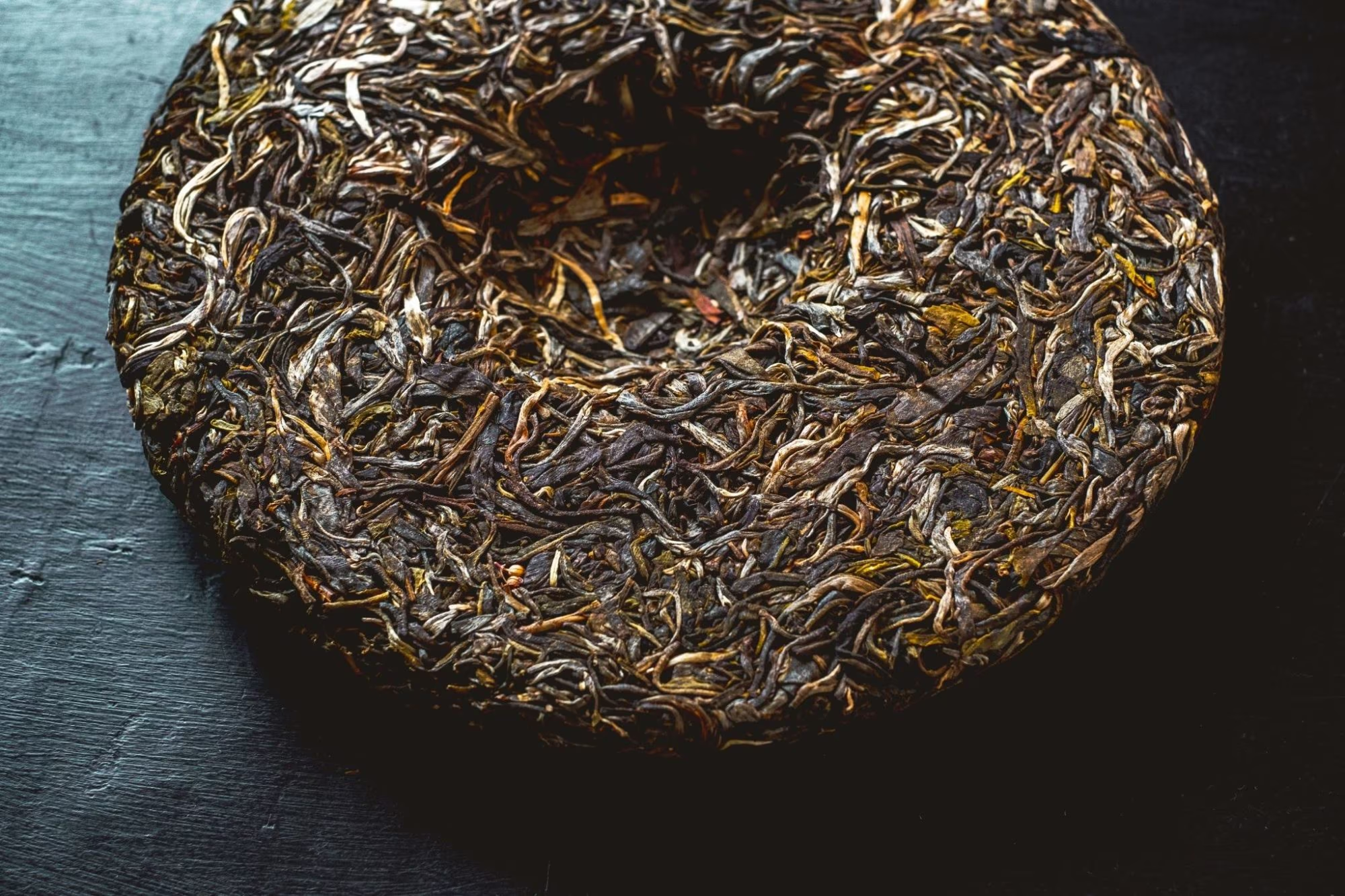
Most tea does not improve with age. A green tea picked in April is at its best by summer, declining by winter, largely exhausted by the following spring. Black tea holds up longer, but after a couple of years most black teas are flat shadows of their original selves.
Pu-erh is different. A good raw pu-erh (sheng) will transform, sometimes radically, over decades. A ten-year-old sheng is a different tea from the one-year version. A thirty-year-old can be different again. This is why pu-erh is the only tea that is genuinely collected — bought young, stored, and drunk decades later.
Understanding how this works helps explain both why pu-erh is made the way it is and why people spend thousands of pounds on old cakes.
What Happens Chemically
Two things happen to pu-erh in storage: slow oxidation and microbial fermentation. Both are active biological processes that keep transforming the tea year after year.
Oxidation is the same basic reaction that turns a cut apple brown. The polyphenols in tea — the compounds that give it astringency and colour — slowly react with oxygen, forming new, more complex compounds. These taste less sharp, more rounded, and warmer than the originals.
Fermentation is the work of microbes living on and in the leaf. Various fungi, bacteria, and yeasts produce enzymes that further break down the leaf's compounds. Over decades this develops characteristic flavour notes: earth, dried fruit, camphor, sometimes a mushroom quality, sometimes a cool menthol-like finish known as cang wei.
The combination is what makes aged sheng distinctive. It is not just oxidized. It has been biologically transformed. That transformation is what you are paying for in a 30-year-old cake.
Storage Conditions
How pu-erh ages depends enormously on how it is stored. Two cakes from the same year, stored differently, can taste nothing alike at twenty years old.
The main factors are humidity and temperature. Traditional "Hong Kong storage" is warm and humid, around 80% relative humidity, which accelerates both microbial activity and oxidation. The resulting tea ages fast but can develop a musty or "wet" character if humidity is too high.
"Dry storage" — typically in Yunnan or northern China, cooler and drier — ages more slowly but more cleanly. The tea takes longer to develop depth, but it retains more of its original character and is less likely to develop off-flavours.
Kunming storage is considered a middle ground and is often cited as producing the most balanced aged sheng. A cake stored in Kunming for 20 years will be in a different place than one stored in Hong Kong for the same time.
What to Expect at Each Stage
One to three years: the tea is essentially still young. Strong, bitter, astringent, sometimes with a fresh vegetal quality from the initial pan-firing. Some sheng is meant to be drunk young; most is not ready.
Five to ten years: first real transformations. The bitterness fades. Honey and dried fruit notes begin to appear. The tea softens but still has character. Five-year-old sheng is often approachable without being mature.
Ten to twenty years: deep transformation. The leaves have turned reddish-brown. The liquor is amber. Flavours of dried fruit, camphor, and sometimes a faint sweetness of aged wood dominate. For many drinkers, this is the sweet spot.
Twenty-plus years: the tea enters its mature phase. Flavours become more subtle and complex. The classic "aged sheng" character — warming, cool finish, deep sweetness — reaches its fullest expression. Cakes of this age are rare and expensive.
Buying and Storing Your Own
If you want to experiment with aged pu-erh, you can either buy aged tea or buy young tea and age it yourself. The first is expensive and risky — fake aged teas are common, and even authentic ones have been stored unknown ways. The second is cheaper but takes time.
Home storage works best in a moderate climate — 18°C to 26°C, 55% to 70% humidity. A breathable cardboard box or clay jar is fine. Avoid strong smells (kitchens, smoke) and direct sunlight. Dry climates may need a small humidity source; very humid climates may need ventilation.
Expect to wait at least five years before significant changes. For most people, the interesting experience is to buy two or three cakes young, drink one a year, and compare the year-by-year evolution. That's when the category becomes a hobby rather than just a drink.