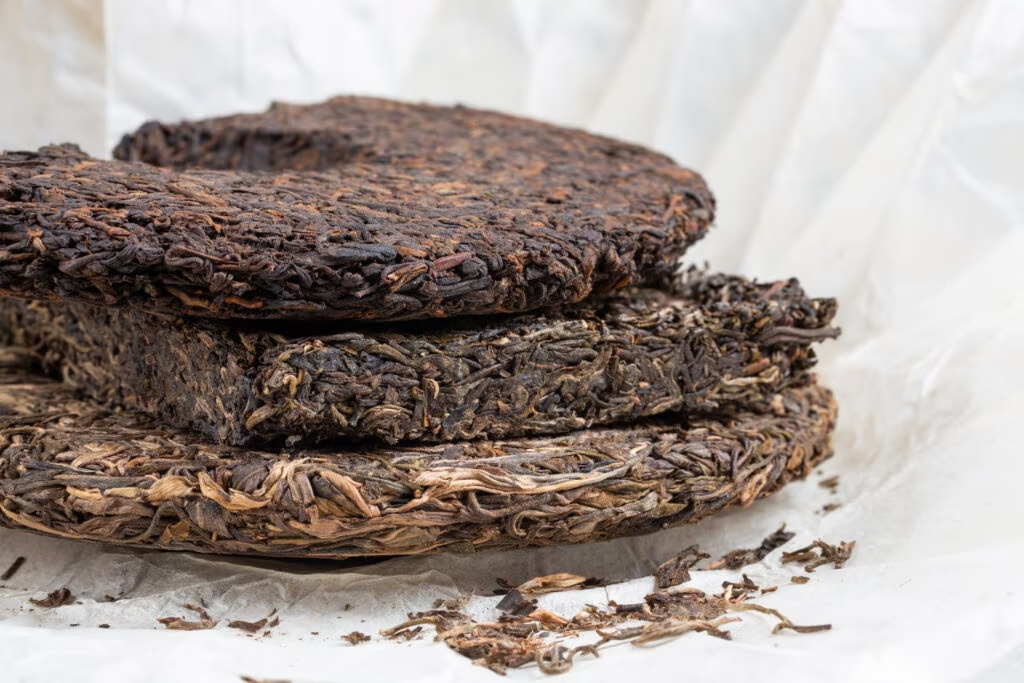
Pu-erh is the most complicated tea category to explain. It comes from one province (Yunnan), is made from one plant varietal (large-leaf Camellia sinensis var. assamica), and has one defining feature: fermentation. But within that one framework, there are two completely different kinds of pu-erh, and the difference between them matters more than almost any other distinction in tea.
Every pu-erh on the market is either sheng (raw) or shou (ripe). They look different, taste different, age differently, and attract different kinds of drinkers. You need to understand both to understand the category.
Sheng: Raw Pu-erh
Sheng pu-erh is the original, traditional kind. Made the way pu-erh has been made for centuries. The leaves are picked, lightly withered, pan-fired (like green tea) to stop oxidation, sun-dried, and usually pressed into cakes.
Freshly made sheng looks and tastes a lot like a rough green tea. The leaves are pale green, the liquor is pale yellow, the flavour is strong, grassy, often bitter and astringent. On its own, a fresh sheng is a difficult tea.
But sheng is meant to age. Over years and decades, stored in a suitable environment, the leaves slowly transform. Colour deepens from pale green through amber to a rich red-brown. The flavour rounds, softens, becomes sweet and complex. A 15-year-old sheng tastes nothing like the same tea at one year old.
This is why sheng exists as a category. It is meant to be drunk young only by specialists who know what they are tasting for. For most people, good sheng pu-erh is a long-term project — tea bought now and drunk in ten or twenty years.
Shou: Ripe Pu-erh
Shou pu-erh is a much more recent invention. Developed in the 1970s by the Kunming Tea Factory, it was an attempt to reproduce the character of aged sheng — which was expensive and rare — through an accelerated process.
The leaves go through an additional step called wo dui, "wet pile fermentation." Huge piles of tea leaves are kept moist and warm for weeks, during which microbes transform the tea. What happens in 40 to 60 days of wet piling approximates what would happen over 15 or 20 years of natural ageing.
Shou is dark brown to black, even when fresh. The liquor is a deep, opaque red-black. The flavour is earthy, woody, sometimes with notes of mushroom, dark chocolate, damp forest floor. It is warming, smooth, and low in astringency. It is an acquired taste, but for people who acquire it, it is one of the great everyday teas — cheap, reliable, and perfectly drinkable straight out of the package.
Which Is Which
Sheng: green-brown leaves (ageing to reddish), pale yellow to amber liquor, often bitter and astringent when young, floral and sweet when aged, improves for decades.
Shou: dark brown/black leaves, deep red-black liquor, earthy and smooth from the start, drinkable immediately, does change with age but less dramatically than sheng.
A cake labelled "1998 sheng" is a 27-year-aged raw pu-erh — potentially remarkable, potentially expensive. A cake labelled "1998 shou" is a 27-year-old ripe pu-erh — still good, but the age matters less because the fermentation did much of the work in the 1990s.
How to Brew Pu-erh
Pu-erh almost always wants gongfu brewing. Western-style single infusions do not do justice to either kind.
For shou: boiling water, 5-6 grams in a 100ml gaiwan or teapot. Quick rinse (5 seconds, discard the water). First proper infusion 10 seconds. Good shou will give 8 to 12 infusions, consistently dark and smooth throughout.
For sheng: similar ratios, but the first rinse matters more because some young sheng can be dusty. Start with slightly shorter first infusions (5 to 8 seconds), as young sheng can be bitter if over-steeped. Aged sheng is more forgiving.
Both kinds tolerate boiling water and reward a heavy-bottomed vessel (Yixing clay is traditional, though a plain porcelain gaiwan works fine). Pu-erh is the easiest tea to ruin by underbrewing — it wants heat and contact time.