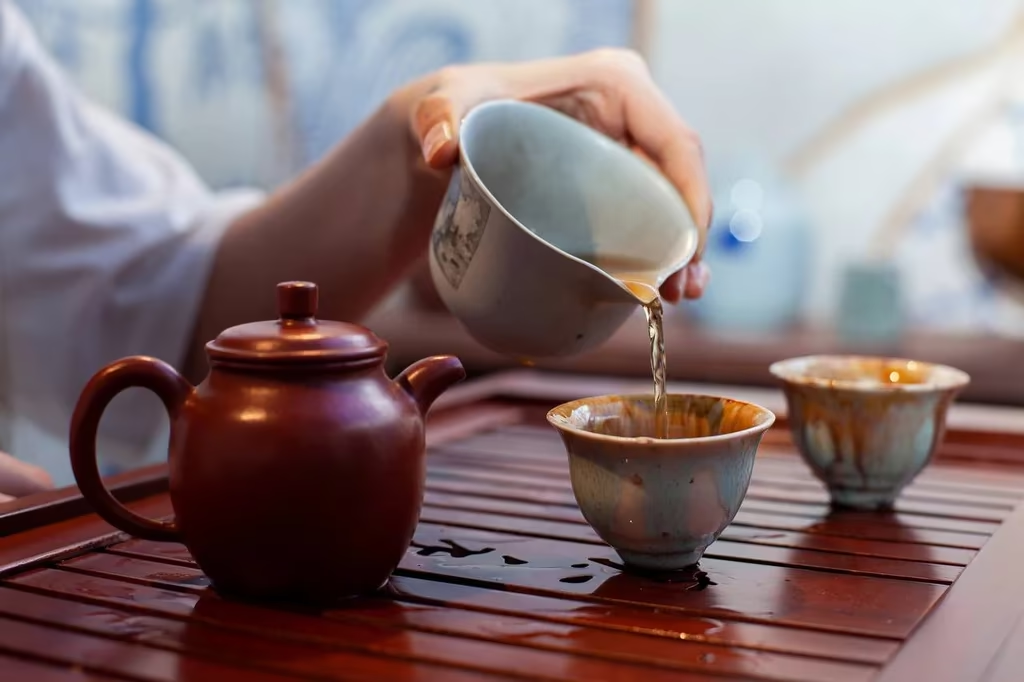
Gongfu cha — which translates roughly as "tea with skill" — is a Chinese method of tea brewing that looks ceremonial but is not. It exists for a practical reason: to show what a good tea can actually do.
The Western way — one spoon of tea in a large pot, five minutes of steeping, one or two cups poured from that — flattens everything. A good Chinese oolong or pu-erh has dozens of flavour layers. A single Western infusion averages them all into one. Gongfu cha, by contrast, pulls each layer out separately by brewing many small, short infusions from a concentrated mass of leaves.
What You Need
The basic setup is simple. A small brewing vessel: a gaiwan (covered cup with saucer, typically 100-150ml) or a small teapot, often Yixing clay. A fairness cup (cha hai), which is a glass or porcelain pitcher that receives the tea as it is poured out of the gaiwan. Small tasting cups, 30-50ml each. A kettle for boiling water.
Optional but useful: a tea tray (cha pan) to catch spilled water; a strainer; a thermometer; tweezers for handling hot leaves. Most Chinese tea drinkers have developed their own small refinements.
None of this needs to be expensive. A simple white porcelain gaiwan, a glass pitcher, and four small cups from a Chinese supermarket will do. The quality of the tea matters far more than the quality of the tools.
The Basic Method
Start with hot water. For most teas, that means just off the boil. Black and oolong teas want boiling; green and light oolong want slightly cooler; aged pu-erh wants boiling.
Rinse your gaiwan or teapot with hot water to warm it. This is not ceremony; cold porcelain steals heat from the water and dulls the first infusion.
Add tea. The ratio is much higher than Western brewing: about 1 gram of tea per 15-20ml of vessel. A 100ml gaiwan takes 5-7 grams. This will look like a lot of tea — it is.
Pour boiling water over the leaves. For the first infusion of most teas, rinse: pour water in, swirl, pour it out immediately. This wakes up the leaves and rinses any dust. You do not drink this water.
Now the real infusions. Pour water in, wait a short time (5-15 seconds for the first proper infusion), pour everything out into your fairness cup. Then distribute from the fairness cup to the small cups. Drink.
Each subsequent infusion can be slightly longer. A typical sequence: 10 seconds, 15, 20, 30, 45, 60, 90. Good tea will give 6 to 12 infusions before it starts to thin noticeably.
Why It Works
The short answer: a concentrated mass of tea gives up its compounds at different rates. Caffeine and volatile aromatics come out first. Polyphenols and heavier flavours come out more slowly. A 5-second infusion captures one slice of this; a 15-second infusion captures another.
Over multiple infusions, you taste the tea's progression. Many oolongs, for example, start aromatic and floral, develop more body in the middle infusions, and finish with a sweet, clean tail. A Western single-infusion brew collapses all of that into an average.
This is also why gongfu cha is not ceremonial in the sense the Japanese tea ceremony is. There is no fixed sequence of gestures, no ritual significance to the movements. You are just trying to make the tea taste like what it can taste like. The method looks ritualized because it requires attention — but the attention is technical, not symbolic.
Practical Notes
Not all teas benefit from gongfu brewing. Basic breakfast tea is designed to work in one long infusion with milk; gongfu will do nothing for it. But any tea that is praised for complexity — good oolong, pu-erh, sheng, aged white, high-grade green, most Chinese black teas — will reward the method.
The timing takes practice. Most beginners overbrew. If your first infusion of an unfamiliar tea is too strong or bitter, cut the time in half for the next attempt. If it's too weak, add a few seconds. Good gongfu brewing is a dialogue between you and the tea.
Expect the first session with a new tea to be imperfect. The second is better. By the fourth or fifth session, you are dialled in, and the tea is giving you everything it has.