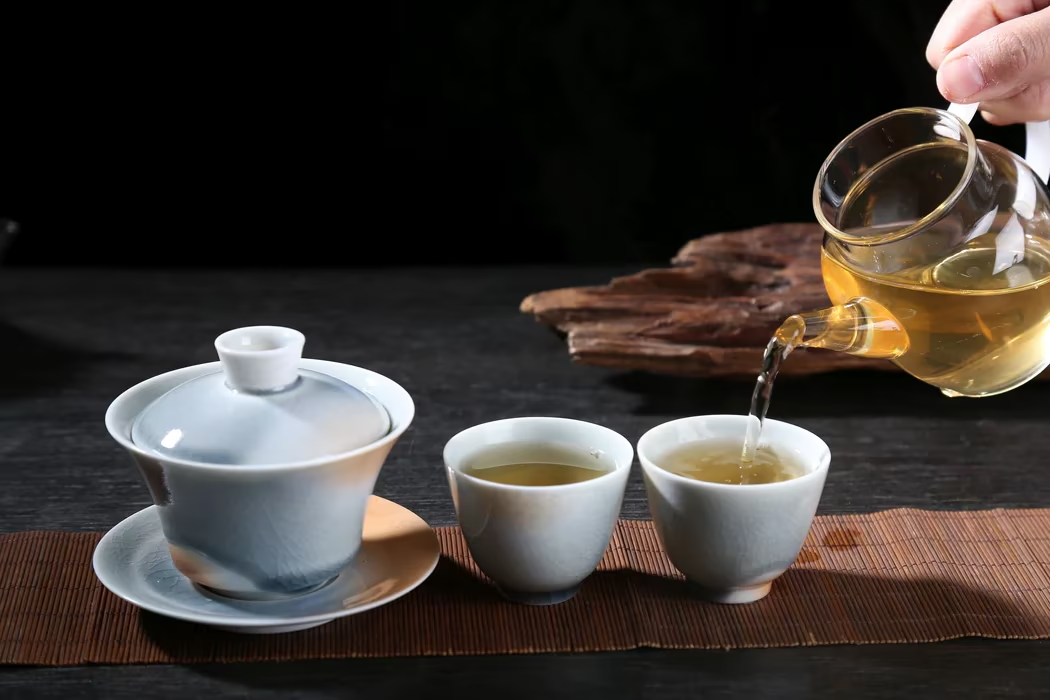
A gaiwan is three pieces of porcelain or glass: a small cup, a matching lid, and a saucer to hold it all. It is the simplest piece of equipment in Chinese tea and arguably the most useful. A skilled drinker can brew almost any tea in a gaiwan — oolong, green, black, pu-erh, white, yellow. Once you learn how to use one, you do not really need a teapot.
The first time people see a gaiwan in action, it looks difficult. The vessel is small, the water is hot, the pour is fast. It takes a bit of practice. But the technique is simple, and the basic motion can be learned in half an hour.
What Size and What Material
A standard gaiwan is around 100-150ml. Smaller ones (60-80ml) are used for intensive gongfu brewing of small quantities; larger ones (180-200ml) are used for sharing or for heavier teas.
For a first gaiwan, 100ml is a good size. It holds one or two cups' worth of tea, is easy to handle, and works for almost any tea type.
Material matters less than you might think. White porcelain is the classic and safest choice — it does not retain flavours, it is easy to clean, and it works for any tea. Glass is also fine and lets you see the leaves. Clay gaiwans exist but are rare; most gongfu clay-brewing is done with Yixing teapots instead.
How to Hold It
This is the part that intimidates beginners. Here is how it works.
Place the gaiwan, cup with lid on, on a flat surface. Put your thumb on one side of the lid's knob. Put your middle finger on the opposite side of the cup's rim. Your index finger rests on top of the lid knob for stability.
To pour, tilt the whole gaiwan toward your fairness cup or other receiving vessel. The lid will shift slightly, creating a small gap between it and the rim of the cup — this is the channel through which the tea flows. The leaves stay inside because the gap is small and the lid acts as a strainer.
The first few times you do this, you will pour slowly and probably spill. After a dozen tries, you will be confident. The key is to grip firmly but not tensely, and to tilt the whole gaiwan together rather than trying to hold the lid separately.
Do not worry about heat. Porcelain gets hot, but the rim of the cup (held between thumb and middle finger) stays cooler than the body, and if you pour within a few seconds of adding water, the heat has not yet transferred through. If you wait a minute before pouring, the cup will be too hot to hold — which is also a sign that you are over-brewing.
Brewing a Tea in a Gaiwan
The method follows standard gongfu principles. Warm the gaiwan with hot water, then discard. Add 4-6 grams of tea to a 100ml gaiwan. Pour boiling water (or appropriate temperature for the tea) over the leaves. Put the lid on.
For the first rinse infusion — 3-5 seconds for most teas. Pour out into the saucer or a separate cup, do not drink.
For the first proper infusion, follow the timing appropriate to the tea: 10 seconds for oolong or pu-erh, 20-30 seconds for delicate green or white.
Pour the whole infusion out into your fairness cup, then into small drinking cups. The leaves stay in the gaiwan for the next round.
Refill, repeat. A gaiwan holds enough leaves for many infusions — a typical session is 6 to 10 rounds.
Care and Cleaning
Do not use soap on a gaiwan. Rinse with hot water after use, empty the leaves, let it dry. Porcelain does not absorb flavours the way clay does, so this is enough.
If you want to use the gaiwan for multiple tea types, rinse more thoroughly between teas and perhaps dry with a clean cloth. But in practice, most people have one gaiwan for everything and it is fine.
Glass and porcelain gaiwans are dishwasher-safe, but hand-washing with hot water is the traditional and gentler option.