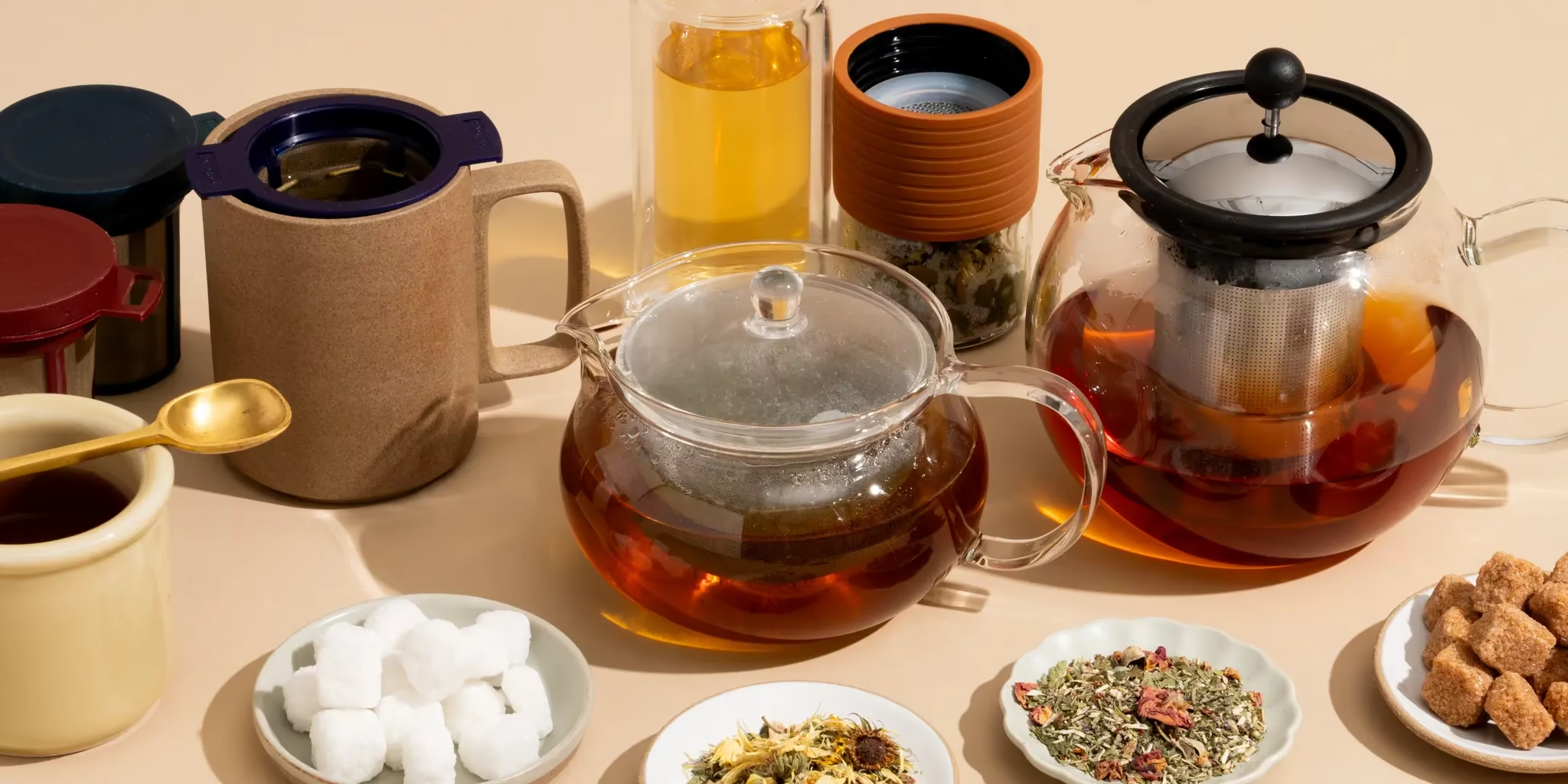
There are two basic approaches to brewing tea. In the Western tradition, you use a large pot or mug, a small amount of tea, and a long infusion — pour the tea off into a cup and drink it, maybe re-infuse the leaves once or twice for a weaker second round. In the Eastern tradition, predominantly Chinese, you use a small vessel, a large amount of tea, and many short infusions, drinking each in turn.
Neither approach is right or wrong. They emerged to serve different kinds of tea and different ideas about tea drinking. Understanding both lets you choose the one that suits what you are drinking.
The Western Method
The Western method is designed for a particular kind of tea: robust, blended, usually black, typically consumed with milk and sugar. English Breakfast, Irish Breakfast, basic Assam — these teas are built for a large pot and a long infusion.
The typical ratio is about 1 gram of tea per 60ml of water. A standard teapot holds around 600ml, so you use about 10 grams of tea. Water is at full boil. Steep for 3 to 5 minutes, strain, pour.
The result is a strong, dark, bitter tea that stands up to milk and food. It is designed to be drunk quickly, in quantity, with breakfast or throughout the day. It is a drink meant to do a job, and it does that job well.
Most fine teas do not suit the Western method. A good Chinese oolong becomes bitter and muddled in a large pot at 4 minutes. A delicate green tea turns astringent and dull. The method was optimized for a particular kind of tea and does not extend well beyond it.
The Eastern (Gongfu) Method
The Eastern method is the opposite in almost every dimension. A small vessel: 100-150ml instead of 600ml. A high leaf ratio: about 1 gram per 15-20ml, so 5-7 grams in a 100ml gaiwan. Short infusions: 10 to 60 seconds each, repeated many times.
The aim is not to get a strong cup of tea in one go. It is to draw out the tea's different layers across multiple rounds. Each infusion tastes different from the one before. A skilled gongfu session with a good oolong or pu-erh might produce 8 or 10 distinct flavour experiences from the same batch of leaves.
This method is slow. A full gongfu session can last an hour. It is meant to be an activity in itself — social, contemplative, or focused. It does not fit into a five-minute breakfast routine. But for the teas it is designed for, it is extraordinary. A tea that costs £50 for 50 grams deserves to be brewed with gongfu method. The same tea in a Western pot is a waste.
When to Use Which
Use the Western method for: breakfast blends, strong black teas, chai, tea served with milk, any situation where you need tea quickly and in volume. Also for teas you do not particularly value — working through a bag of supermarket tea you have had for a while.
Use the gongfu method for: Chinese oolongs, pu-erh, sheng, high-grade green tea, aged white tea, good Chinese black tea (Keemun, Jin Jun Mei), any tea expensive enough that you want to taste it properly. Also for situations where the tea is the focus, not the accompaniment to something else.
Some teas are ambiguous. Darjeeling works well in both, though the Western method is more traditional for it. Japanese sencha works in a Western-style small pot and is not really suited to gongfu method. Your own preferences will develop over time.
A Middle Path
Many people develop a hybrid approach. A medium-sized teapot (200-300ml), a moderate leaf ratio (about 1 gram per 30ml), two to four infusions of increasing length. This works well for most teas, gives you more than a single Western infusion would, but does not require the full commitment of gongfu method.
A typical hybrid session: 8 grams of oolong in a 250ml pot, water just off the boil. First infusion 90 seconds, second 2 minutes, third 3 minutes. Three cups per infusion. Total time: maybe 15 minutes. More interesting than a single big pour, more practical than full gongfu.
The point is not to be dogmatic. Pick the method that suits your tea, your time, and your mood. Western brewing is not wrong. Gongfu brewing is not sacred. Both are tools for extracting flavour from leaves, and the best tea drinkers use whichever one the moment calls for.