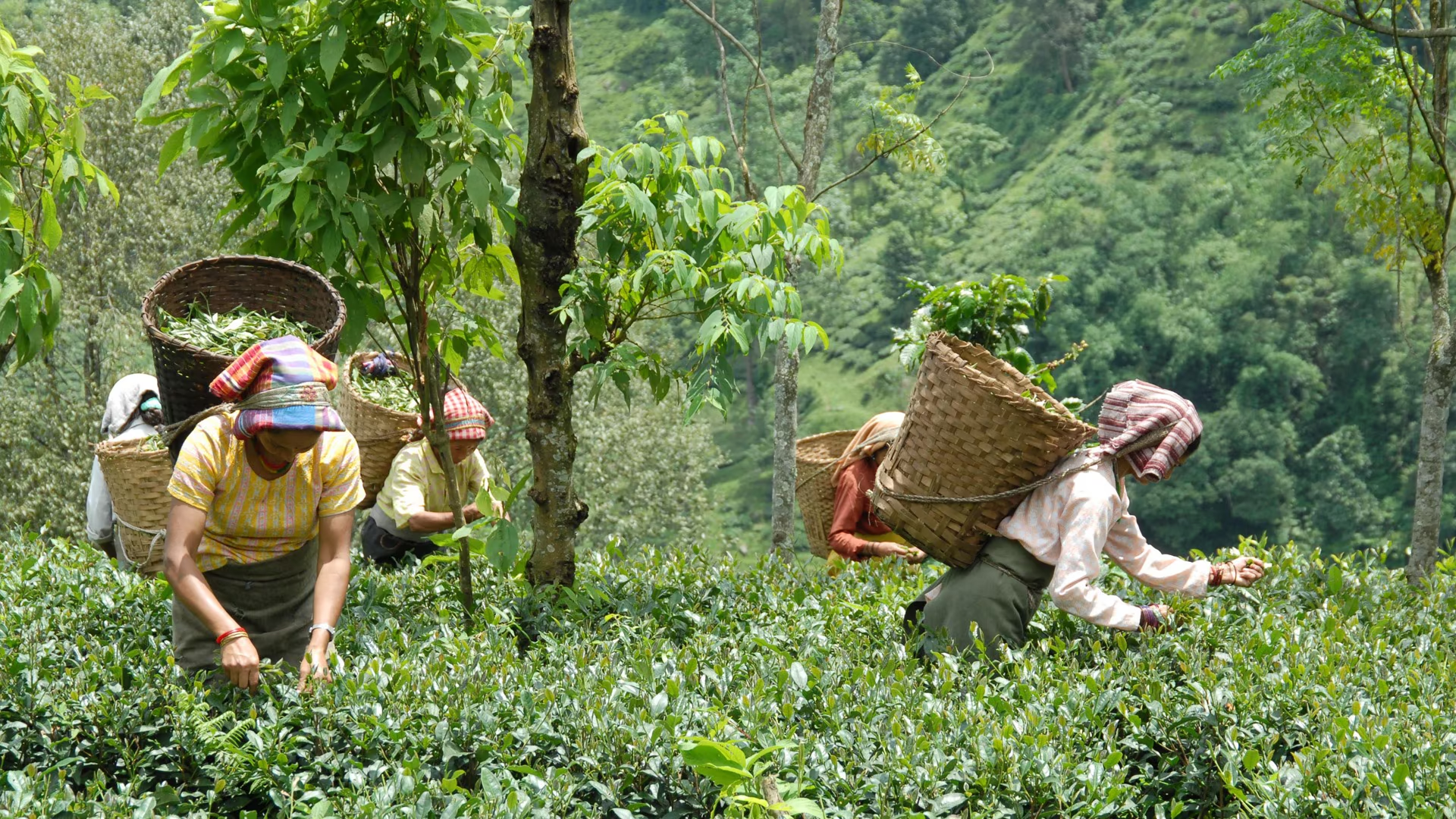
India produces more black tea than any country on earth, but two small regions make the country's great teas: Darjeeling in the Himalayan foothills, and Assam on the hot plains of the northeast. They are 800 kilometres apart, and they produce teas that have almost nothing in common.
Understanding the difference between them is the fastest way to understand that black tea is a category, not a thing.
Darjeeling: High and Bright
Darjeeling is a town in the Himalayan foothills of West Bengal, at about 2,000 metres elevation. Tea has been grown here since the 1840s, when the British planted Chinese cultivars on the steep slopes. The climate is cool and misty, with four distinct harvesting seasons called flushes.
First flush (spring): the most prized harvest, picked in March and April. The tea is light in colour, thin in body, intensely floral, with a distinctive note sometimes described as "muscatel" — a suggestion of muscat grapes. First flush Darjeeling is a connoisseur tea. It is expensive and short-lived.
Second flush (early summer, May-June): fuller-bodied, with the muscatel character more developed. Often considered the best-balanced Darjeeling — less ethereal than first flush, more rewarding across a range of brewing methods.
Monsoon and autumn flushes exist but are less celebrated. The teas from these harvests are darker, earthier, used mostly in blends.
What you will notice about Darjeeling, tasting it for the first time: it does not taste like "black tea" as most people know it. It is thin and almost wine-like. It does not work with milk. It is often better brewed lighter than a standard Indian black tea.
Assam: Hot and Malty
Assam is the opposite. It is grown in the hot, humid valleys of the Brahmaputra River in India's northeast — low elevation, tropical climate, abundant rain. The plant used here is a different subspecies: Camellia sinensis assamica, native to the region, with larger leaves and a more robust character than the Chinese varietal used in Darjeeling.
Assam tea is typically fully oxidized, dark in colour, with the thick, malty flavour that defines most British-style tea. It is what is in English Breakfast blends. It holds up beautifully with milk and sugar. It can be drunk any time of day, in any quantity.
Quality Assam is sold by grade, based on leaf size and tips (the youngest unopened buds). TGFOP — Tippy Golden Flowery Orange Pekoe — is a typical high grade. FTGFOP is higher still. The letters are not about flowers or oranges; they are old British grading conventions that stuck.
A good single-estate Assam is a serious tea. It is rich, honeyed, with complex notes of malt, dark caramel, and sometimes a faint note of dried fruit. It rewards a strong brew. It is the opposite of Darjeeling in almost every way.
Why They Are So Different
The main reasons: altitude, climate, and plant subspecies. Darjeeling's high elevation and cool mist slow the plant's growth, concentrating flavour compounds and producing thin, fragrant leaves. Assam's heat and humidity accelerate growth, and the large-leaved assamica subspecies naturally produces a heavier, maltier tea.
Processing is also different. Darjeeling is usually made orthodox, with careful handling to preserve leaf integrity. Assam is made both orthodox and CTC. The CTC version — most of what goes into tea bags — is a robust, quick-brewing everyday tea. The orthodox single-estate version is a different drink, more refined.
Which to Drink When
Darjeeling is an afternoon tea. It is light enough not to overwhelm the afternoon, complex enough to reward attention. It pairs well with biscuits, light cakes, nothing heavier. First flush Darjeeling in particular wants to be drunk without milk, in a glass or a thin porcelain cup where you can see the colour.
Assam is a morning tea. Strong enough to go with a full English breakfast. It is also the base of most breakfast blends, so if you drink English Breakfast with milk, you already drink Assam. The single-estate orthodox version, brewed with attention, is worth trying at least once — it will change your sense of what the morning tea can be.