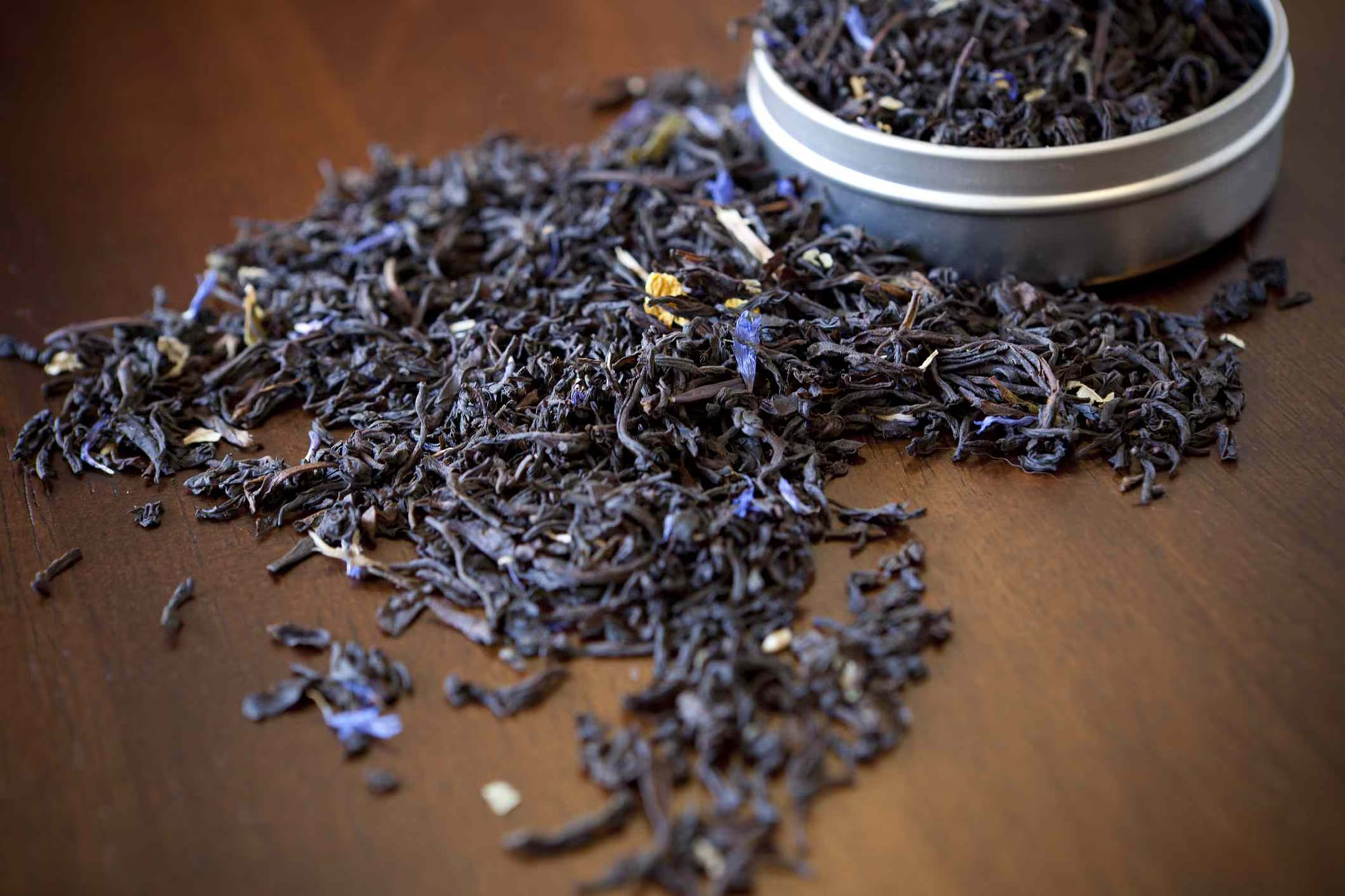
Earl Grey is the most famous flavoured tea in the world, and probably the one most people have drunk without ever thinking about what it actually is. For many Westerners, Earl Grey is the first tea they encounter that tastes of something beyond generic "tea" — and for some it is the only loose-leaf tea they will ever buy.
The recipe is simpler than the reputation suggests. Earl Grey is a black tea — usually a blend of several origins — perfumed with oil from the bergamot orange, a bitter citrus fruit grown almost exclusively in Calabria, southern Italy. That is the whole formula. Everything else about Earl Grey — the legend, the variations, the milk-or-no-milk debate — is commentary on those two ingredients.
The Legend of Earl Grey
The tea is named after Charles Grey, 2nd Earl Grey, who served as British prime minister from 1830 to 1834. The story, told on the side of a thousand tea tins, is that a Chinese mandarin gifted the blend to the Earl in gratitude for some favour — sometimes it is the rescue of the mandarin's son, sometimes a diplomatic intervention. The Earl loved it, shared it with friends, and a London tea merchant began selling it under his name.
The story is almost certainly false. Charles Grey never travelled to China, and there is no documentary evidence he ever received such a gift. The Grey family's own tea tradition only surfaces in the historical record decades later. What is more likely is that the blend was developed by a British tea merchant in the mid-19th century and marketed under the name of a famous, respectable former prime minister — exactly the kind of branding that sold tea in Victorian London.
Several companies claim the original recipe. Jacksons of Piccadilly and Twinings have both asserted it. Neither claim holds up under close inspection. The true origin of Earl Grey as a commercial product is simply lost.
What's Actually in the Tin
A traditional Earl Grey is a black tea base scented with bergamot oil. Historically, the base was often Keemun — the Chinese black tea from Anhui whose smoky, cocoa-like character pairs naturally with bright citrus. Keemun Earl Grey still exists, usually marketed as a premium version, and it is what the blend was probably intended to taste like.
Most modern Earl Grey uses a cheaper, more assertive base: Ceylon, Assam, or a blend of the two. These give a stronger, more astringent tea that stands up to milk. Some mass-market Earl Greys use synthetic bergamot flavouring rather than oil from the fruit itself, which is noticeably different — sharper, more one-note, without the slight resinous depth of the real thing.
Reading the tin matters. "Bergamot oil" on the ingredients is the real fruit; "natural flavour" or "bergamot flavouring" may not be. The difference in cup is not subtle.
The Fruit Behind the Flavour
Bergamot (Citrus bergamia) is a citrus hybrid grown almost entirely in the coastal strip of Calabria in southern Italy. It is not eaten — the flesh is too sour and bitter to be pleasant — but the rind contains an essential oil with a distinctive floral, slightly resinous citrus character. That oil is what flavours Earl Grey.
The extraction is mechanical rather than chemical: the peels are pressed, and the oil floats off the juice. A kilogram of oil takes about 200 kilograms of fruit. The same oil is used in perfumes — it is one of the signature notes of classic colognes — and some of that perfumed character comes through in the tea.
Calabrian bergamot is protected under European designation of origin rules, though the designation applies to the fruit itself rather than to Earl Grey as a named tea. Most high-end Earl Grey blends specify Calabrian bergamot; the difference against generic citrus oils is real.
The Family of Greys
Earl Grey has produced more named variations than any other tea blend.
Lady Grey is a Twinings trademark: Earl Grey base with added orange and lemon peel, lighter and more citrus-forward. French Earl Grey typically adds rose petals and sometimes vanilla, producing a softer, more floral profile. Russian Earl Grey tends toward added lemon peel and sometimes vodka or brandy flavouring. Earl Grey Cream is Earl Grey with added vanilla, a heavier, more dessert-like drink. Smoky Earl Grey uses a Lapsang Souchong base and pulls the tea toward campfire and leather.
These are all legitimate teas in their own right, but none of them are Earl Grey in the strict sense. The original is just black tea and bergamot.
How to Brew It Well
Earl Grey responds well to straightforward Western brewing. Three grams of tea per 200ml of water, just off the boil, three to four minutes. A good-quality loose leaf will give a second infusion, though with visibly less bergamot.
Whether to add milk is a matter of taste and of blend. A strong Ceylon- or Assam-based Earl Grey handles milk without difficulty — the bergamot survives, the tea becomes rounder. A delicate Keemun-based Earl Grey is flattened by milk; the subtleties of the base tea disappear, and you are left drinking citrus-flavoured dairy. Sugar similarly overwhelms a finer Earl Grey but suits a robust one.
The cup Earl Grey suits best is a bone china one in afternoon light. That is not a superstition — the bergamot aroma lifts in a warm, thin-walled cup in a way it does not in thick stoneware. The Victorians knew this, even if they could not have said why.