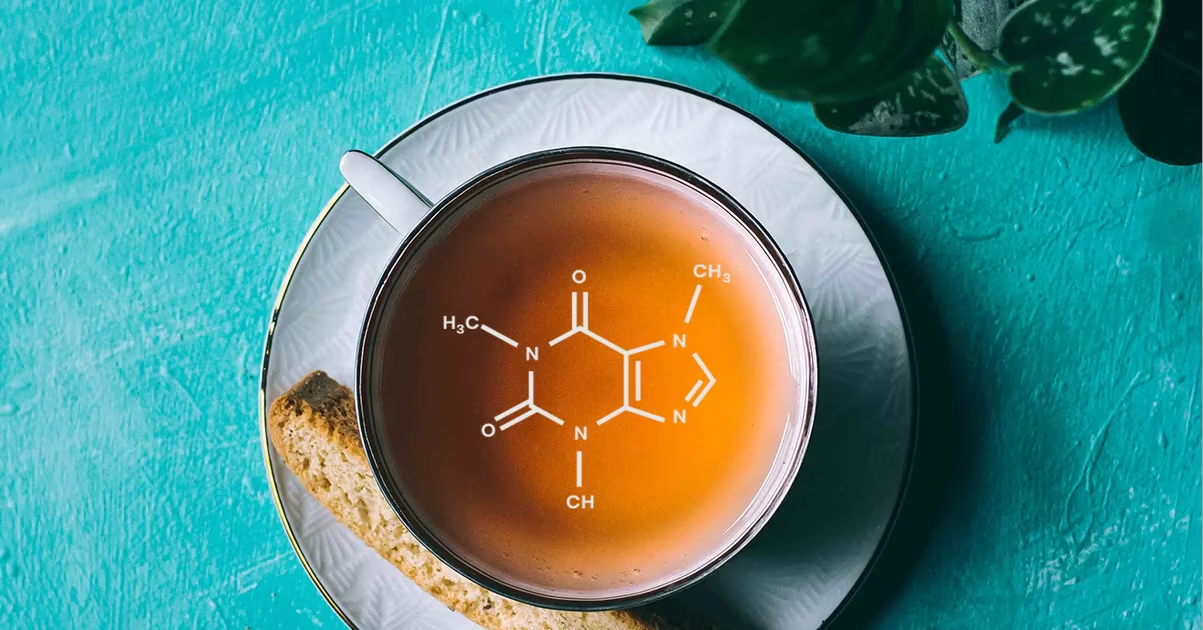
Tea contains caffeine, but not in the way most people think. The numbers commonly quoted — "black tea has half the caffeine of coffee," "green tea is nearly caffeine-free," "white tea is the lowest" — are partial truths at best. In a brewed cup, the category of tea is only one of several variables, and not always the most important.
What follows is a reference to the figures, the variables behind them, and the places where received wisdom is wrong. The aim is to let readers understand what is actually in their cup, rather than to recommend any particular intake.
The Approximate Numbers
For a standard 240ml (8oz) cup, brewed in the usual Western way, typical caffeine content falls roughly in these ranges:
Drip coffee: around 95 milligrams, with a range from 70 to 140 depending on bean, roast, and brewing method. Espresso: about 63 milligrams per 30ml shot. Black tea: around 47 milligrams, ranging from 25 to 70. Oolong tea: around 37 milligrams, 30 to 60. Green tea: around 29 milligrams, 15 to 50. White tea: around 15 to 20 milligrams, occasionally higher. Pu-erh: similar to black tea, 30 to 70. Herbal "tea" (which is not really tea): zero caffeine, with a small handful of exceptions such as yerba maté.
These numbers are averages from published analyses of commercially available teas. Individual cups can fall well outside these ranges. A strong Assam brewed long can exceed 90 milligrams; a delicate Silver Needle brewed briefly can fall below 10. The category is a starting point, not a prediction.
Why Tea Differs from Coffee
Tea leaf and coffee bean are surprisingly similar by dry weight. A Camellia sinensis leaf is around 1.4 percent caffeine. An arabica coffee bean is around 1.2 percent; robusta is closer to 2.2. In the raw material, tea is competitive with coffee.
The difference is what the brewer does. A 240ml cup of drip coffee is made from roughly 10 grams of ground beans, and the hot water is in contact with the grounds for several minutes — enough to extract most of the caffeine. A 240ml cup of Western-style tea is made from roughly 2 to 3 grams of leaf, steeped for 3 to 5 minutes. Less material, less extraction, less caffeine in the cup. The plant is not low-caffeine; the brewing is.
This is why gongfu-style tea, which uses 5 to 7 grams of leaf in a small vessel with many short infusions, can produce a more caffeinated experience than Western brewing of the same tea — even though each individual cup is smaller. Over six or seven infusions, the total extracted caffeine is substantial.
What Actually Affects It
Several factors shift caffeine content in a cup, in roughly decreasing order of importance.
Steeping time. This is the single largest variable. Caffeine is highly water-soluble and extracts quickly — a 3-minute steep pulls out substantially more than a 1-minute steep. A 5-minute steep is near the maximum; past that, extraction flattens out.
Water temperature. Hotter water extracts caffeine faster. A green tea brewed at 70°C contains less caffeine than the same tea brewed at 85°C, even at the same steeping time. This is why cold-brewed tea, which steeps for hours at refrigerator temperature, still ends up with less caffeine per cup than a short hot brew.
Leaf-to-water ratio. Obvious but worth stating: more leaf means more caffeine. Two tea bags in one cup doubles the available material.
Leaf position on the plant. Younger leaves and unopened buds contain more caffeine than mature leaves. The tea plant concentrates caffeine in its newest growth, probably as an evolutionary defence against insects. This is why Silver Needle — made entirely of buds — is not actually the lowest-caffeine white tea despite its reputation. Shou Mei, made from mature leaves, often contains less.
Oxidation level. This is where received wisdom is most wrong. Oxidation — the process that turns green tea into oolong and then black tea — has only a minor effect on caffeine content. Black tea is not substantially higher in caffeine than green tea because it is more oxidised; the two are roughly comparable by category, and the differences mostly come from other variables. The widespread belief that "more oxidised means more caffeine" is false.
Why Tea's Caffeine Feels Different
Many drinkers report that tea's caffeine feels different from coffee's — less jagged, longer-lasting, more conducive to focus than jitter. This is not purely subjective. Tea contains an amino acid called L-theanine, which coffee contains in only trace amounts.
L-theanine crosses the blood-brain barrier and has measurable effects on brain activity, increasing alpha-wave activity associated with relaxed alertness. Studies have shown that L-theanine and caffeine taken together produce different cognitive effects than caffeine alone — generally, a smoother stimulation with less of the anxiety and vasoconstriction that high-dose caffeine can produce.
Shade-grown teas — matcha, gyokuro — contain particularly high L-theanine levels, because shading causes the plant to produce more amino acids. This is part of why matcha, despite having more caffeine per gram than most teas, produces a quieter effect than an espresso with comparable caffeine.
None of this makes tea a better or worse stimulant than coffee. It makes it a different one, with a different pharmacological profile. The lived experience that drinkers report — tea's slower, steadier arc versus coffee's sharper peak — has a basis in the chemistry.
Decaffeination and the Folk Myth
Several teas are naturally very low in caffeine. Aged pu-erh, especially ripe pu-erh that has been stored for years, can be lower than fresh tea of the same kind. Roasted oolongs (such as heavily fired Tieguanyin) sometimes test lower than their lighter counterparts, though the effect is small. Twig-based teas — Japanese kukicha, which is made from stems rather than leaves — contain substantially less caffeine than normal sencha, perhaps 10 to 15 milligrams per cup.
Decaffeinated tea is real tea from which most caffeine has been removed industrially. Two common methods are used: carbon dioxide extraction, which is gentler on flavour, and ethyl acetate, which is cheaper but produces a flatter cup. Decaf tea still contains trace caffeine — typically 2 to 5 milligrams per cup, not zero.
A widely repeated piece of folk wisdom holds that a quick "rinse" — steeping the tea for 30 seconds, discarding the water, then brewing properly — removes most of the caffeine. This is mostly wrong. Published studies have shown that a 30-second rinse removes around 10 to 20 percent of the caffeine, not the 80 to 90 percent sometimes claimed. If you are trying to minimise caffeine, choose a naturally low-caffeine tea, or a genuine decaf, rather than relying on the rinse.