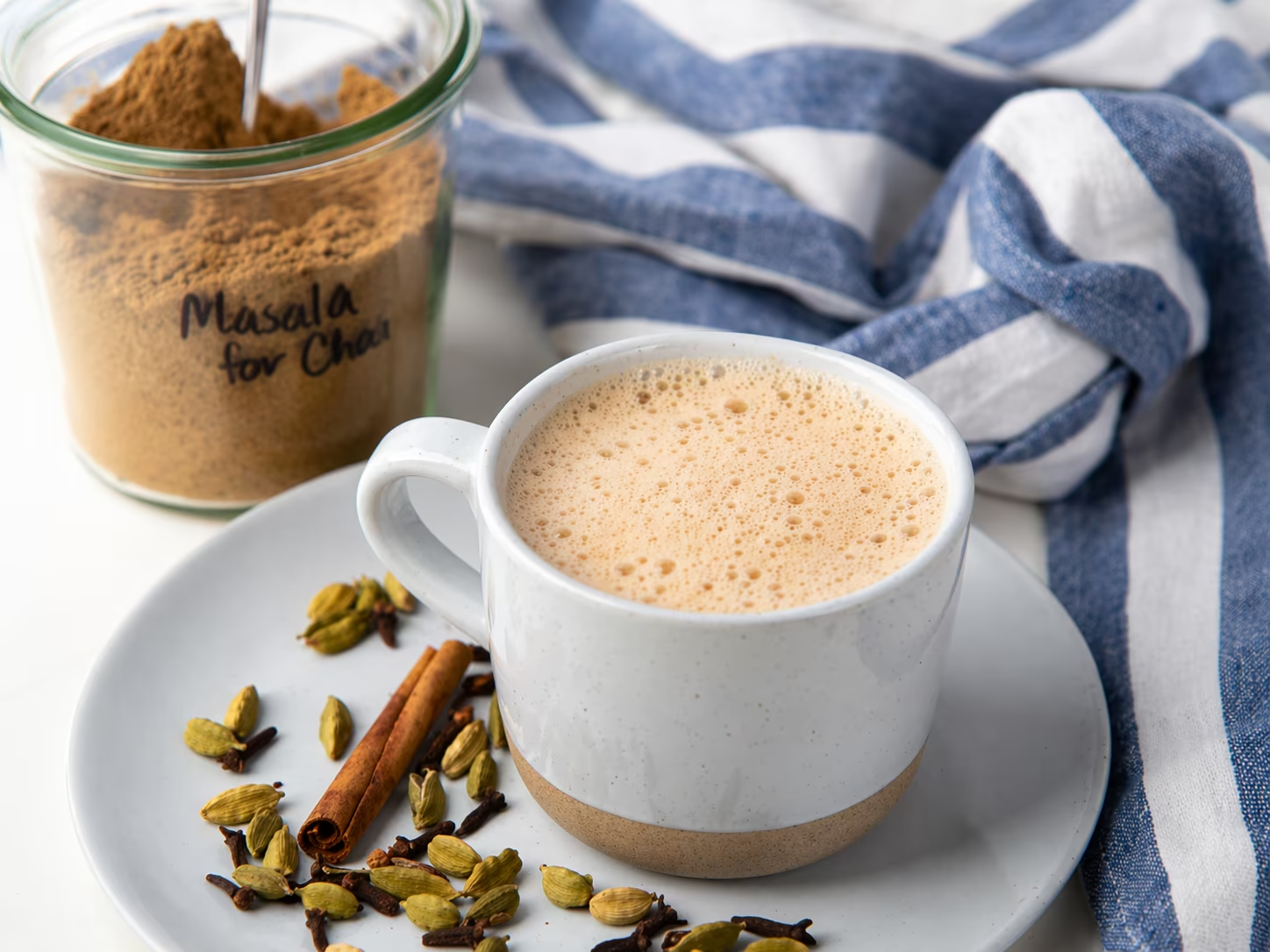
"Chai tea" means "tea tea." The word chai is simply the Hindi word for tea, which itself comes from the Mandarin cha. Ordering a chai tea in Delhi would produce a confused look; ordering one in a California coffee shop produces a large paper cup of something sweet, spiced, and usually bearing only a distant resemblance to the original. Both responses are, in their own way, accurate.
The drink the West calls chai is properly masala chai — spiced tea. It is one of the most-drunk beverages in the world, consumed by hundreds of millions of people in India every day, and it is nothing like the syrupy lattes sold in its name abroad. The real thing is simpler, sharper, and stronger.
What Masala Chai Actually Is
Masala chai is a preparation, not a product. You cannot buy masala chai in leaf form — what you buy is tea, spices, and milk, assembled at the point of making. The components are fixed in outline: strong black tea, whole or cracked spices, water, milk, and sugar. The proportions and specific spices vary by region, by household, and by the mood of the person making it.
Plain tea exists separately in India. What you get at a chaiwala — a street tea seller — if you ask for "chai" without qualification is usually masala chai, but in some regions the default is simpler: tea boiled with milk and sugar, no spices. The distinction matters to the cook, if less so to the drinker.
The Masala
Masala simply means "spice mixture." A masala for chai has no fixed recipe, but certain spices appear almost universally: green cardamom, ginger, cinnamon, cloves, black pepper. These are the foundation. Beyond them, recipes diverge.
Star anise and fennel seed turn up in some households. Nutmeg, mace, and bay leaf appear in others. In winter, the ginger is cranked up. In summer, some recipes lighten the load of cloves and pepper. A Gujarati chai tends to be lighter; a Punjabi chai is often heavier on ginger and cardamom; a Kashmiri preparation is different enough to have its own name (see below).
The spices are typically crushed rather than ground — bashed in a mortar and pestle to release oils — and added whole to the boiling water. Pre-ground masala powders exist and are convenient, but they lose aroma quickly and produce a flatter drink.
The Tea Underneath
The black tea base for masala chai is almost always Assam — specifically CTC Assam, the crushed-granule form that produces a strong, dark infusion in minutes. Leaf-grade Assam or Darjeeling would be wasted here; the milk and spices would obliterate the subtleties that those teas are made for. What masala chai needs is body, colour, and resilience.
A good chai uses roughly a teaspoon of CTC Assam per cup, boiled until the tea is very dark. The proportion of milk varies — in Mumbai, the ratio is often closer to half water, half milk; in Punjab, the milk proportion can be higher still. Sugar is generous, usually two to three teaspoons per cup. The result is thick, dark-amber, and assertive.
How It Is Made
The traditional preparation is simple and sequential, not the "tea bag in hot milk" that some Western recipes suggest.
Water goes into a small saucepan first, brought to a simmer. The crushed spices go in and simmer for a minute or two, opening up. The tea is added and simmered for another two or three minutes, until the water is very dark. Milk and sugar are added together, and the whole pan is brought to a full rolling boil — sometimes twice, lifting it off the heat when it threatens to boil over, then returning it. This double-boil, called ubla ubla in some places, thickens the chai and is part of why street chai tastes richer than home-made attempts.
The chai is strained into small glasses or clay cups (kulhads) and drunk immediately. It is never reheated.
Variations and the Western Cousin
Masala chai is not the only Indian tea. Kashmiri kahwa, from the north, is a very different drink: green tea brewed with saffron, cardamom, cinnamon, and often almonds, served without milk and sometimes with a squeeze of lemon. It belongs to a Central Asian tradition rather than a South Asian one, and it tastes nothing like masala chai.
Noon chai (also Kashmiri) is pink, salty, and milky — the product of a specific processing technique involving baking soda, and a taste that takes practice to appreciate. Butter tea from Tibet and Bhutan, sometimes grouped with Indian teas, is different again.
The Western "chai latte" — espresso-machine-steamed milk poured over a pre-made chai concentrate or syrup — is a descendant of masala chai, not the thing itself. The concentrate is often over-sweetened, under-spiced, and based on mediocre tea. It is not bad; it is just a different drink, the way instant coffee is a different drink from a cup made from freshly ground beans. The name it is sold under — "chai tea latte" — translates, strictly, as "tea tea milked."