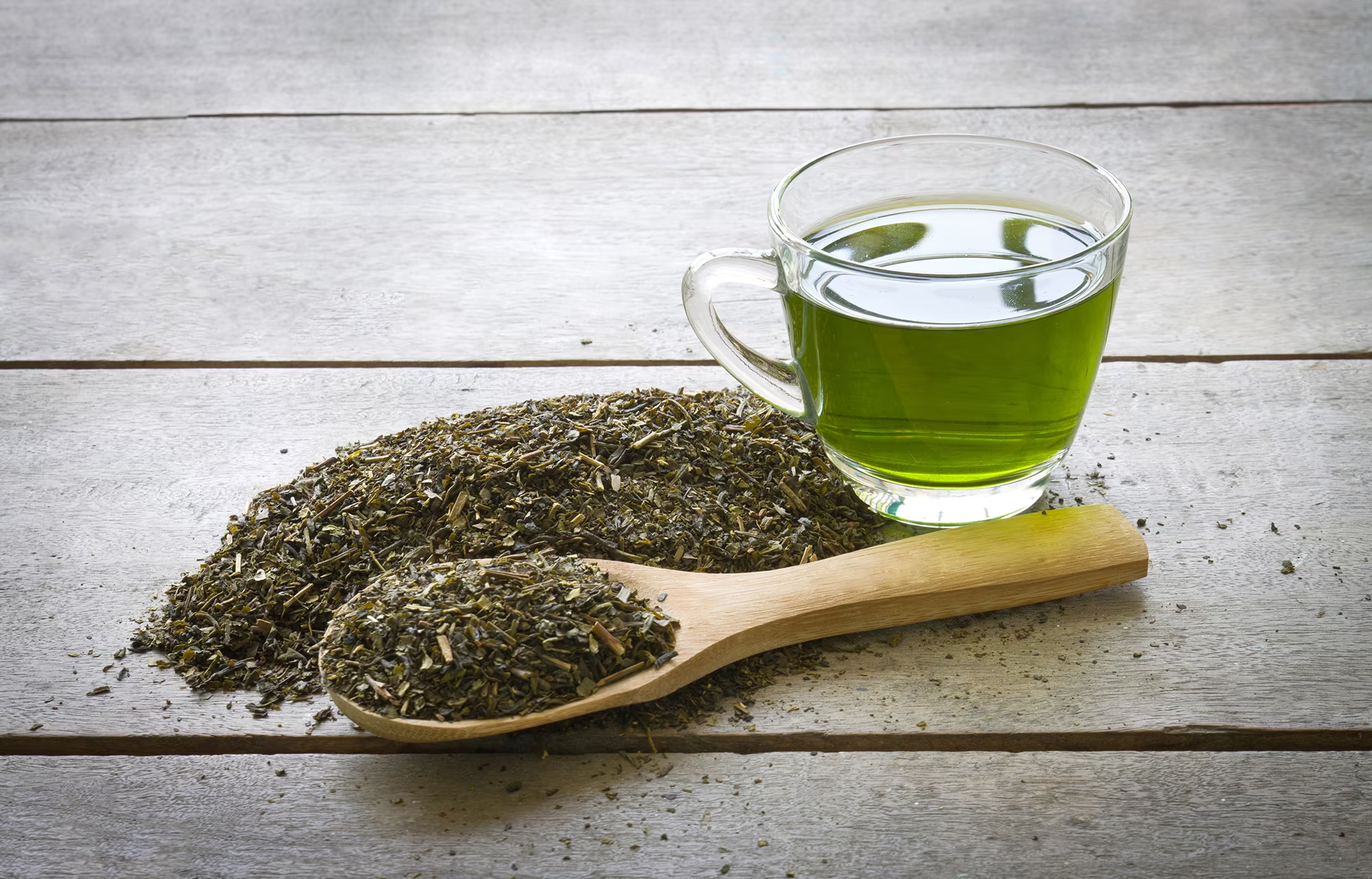
To understand Japanese green tea, start with the difference between two of its most important styles: sencha and gyokuro. They are made from the same plant, in the same country, often at the same farms. The difference between them is a few weeks of shade before harvest — and that small change produces two of the most distinct teas in the world.
Sencha: The Everyday Tea
Sencha is by far the most commonly drunk green tea in Japan. It accounts for roughly three-quarters of Japanese tea production. If a Japanese person says ocha — tea — without specifying, they usually mean sencha.
It is grown in open sun. The leaves are picked in spring, steamed briefly to stop oxidation, rolled, shaped, and dried. The result is a tea that tastes bright, grassy, a little astringent, with the kind of fresh vegetal quality that comes from leaves that have had plenty of sunlight.
Good sencha has an almost marine quality — a hint of seaweed, or the sea itself. It should taste clean, clear, and alive. Cheap sencha, which is most of what gets exported, tastes merely green.
Gyokuro: The Shaded Tea
Gyokuro means "jade dew." It is made the same way as sencha, from the same plant, in the same way — except that for the last three weeks before harvest, the tea plants are covered. Bamboo screens, straw mats, or modern black fabric are placed over the fields, blocking roughly 90 percent of sunlight.
The plant responds to the shade by producing more chlorophyll (making the leaves darker green) and more amino acids, especially theanine. It produces less of the polyphenols that give tea its astringency. The leaves become, in effect, a different kind of leaf — sweeter, richer, less bitter.
Brewed, gyokuro tastes unlike anything else. It is savoury in a way that green tea usually is not. Japanese tea drinkers describe the quality as umami — the same taste you find in soy sauce, mushroom broth, aged cheese. Gyokuro has it in a vegetal key.
Brewing the Two
The brewing methods are as different as the teas. Sencha is brewed with water around 70°C to 80°C, infused for 30 to 60 seconds. It is a drinkable tea — you pour, you sip, you move on.
Gyokuro is brewed with water at 50°C to 60°C — barely warm by most standards. The first infusion can take two minutes. The resulting tea is served in tiny cups, a few sips each. It is drunk slowly, almost like a shot of something concentrated. The leaves are then re-brewed, and the second infusion is hotter and quicker than the first.
A properly brewed gyokuro is so different from a properly brewed sencha that many people, tasting them side by side for the first time, do not believe they are both green tea.
Which Should You Drink
Sencha is the better tea for most situations. It is refreshing, food-friendly, drinkable in volume. It costs a reasonable amount for good quality. A good sencha from a spring harvest is among the best daily teas you can have.
Gyokuro is an occasion tea. It is expensive — high-grade gyokuro is among the most expensive teas in Japan — and it does not reward fast drinking. It wants time, attention, and small cups. For people who have never had it, gyokuro is worth finding at least once; but most people who try it end up drinking sencha most days and gyokuro a few times a year.
Neither is better than the other. They are two answers to different questions about what green tea can be.