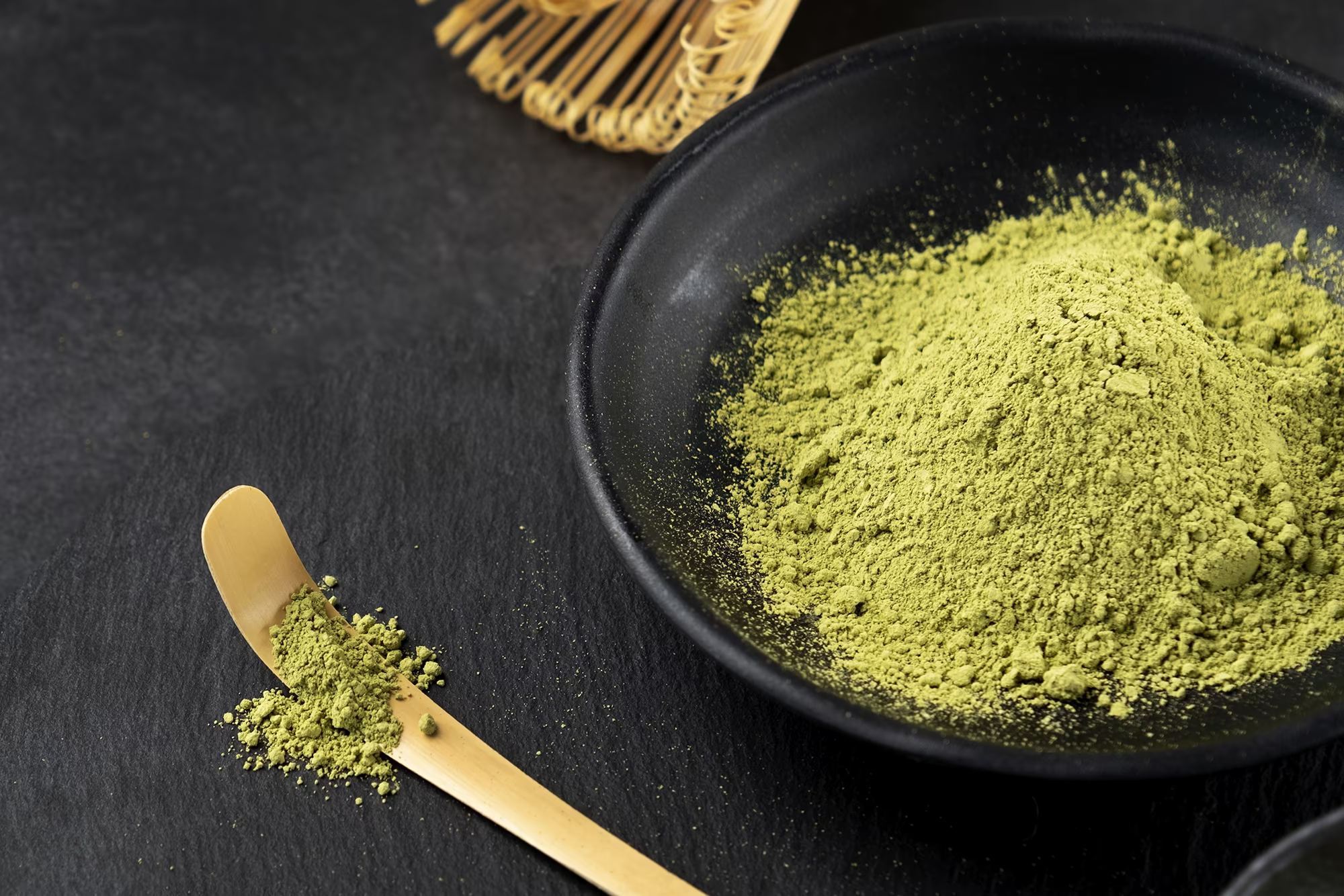
Matcha is Japanese green tea, but drunk in a fundamentally different way from sencha or gyokuro. Those teas are infusions — you pour hot water over the leaves, the water extracts some of the compounds, and you drink the liquid. Matcha skips that step. The tea leaves themselves are ground into a fine powder, whisked into water, and drunk whole.
That difference changes everything about how matcha tastes, how it is made, and what it does to you. Drinking matcha is drinking leaves.
How Matcha Is Made
The tea plants destined for matcha are shade-grown, much like those for gyokuro — covered for about three weeks before harvest to increase chlorophyll and amino acids, decrease astringency.
After harvest, the leaves are steamed and dried, but not rolled. This step produces a leaf called tencha, which is essentially the raw material for matcha. Tencha is then carefully de-stemmed and de-veined, leaving only the soft leaf flesh.
The final step is grinding. Traditional matcha is ground in granite stone mills, turning very slowly — as slowly as 30 rotations per minute. It takes roughly an hour to produce 30 grams of matcha. The result is an extraordinarily fine powder, finer than flour, a vivid jade green.
Ceremonial vs Culinary
Matcha comes in two broad grades: ceremonial and culinary. The names are marketing terms — there is no formal certification — but the distinction is real.
Ceremonial grade is made from the first spring harvest of young tea leaves, shade-grown the longest, most carefully processed, most finely ground. It is bright jade-green, tastes sweet and savoury with minimal bitterness, and is meant to be drunk as-is, whisked into water. The best ceremonial matcha is expensive — tens of pounds for 30 grams is normal.
Culinary grade comes from later harvests, is less carefully shaded, and is coarser. It tastes more bitter and green, is duller in colour, and works well mixed into lattes, desserts, or cooking. You should not try to drink it straight as a bowl of matcha — it will be unpleasant. You also should not use ceremonial matcha in a latte — you will not be able to taste it through the milk.
How to Prepare Matcha
The traditional tools are a chawan (wide bowl), a chasen (bamboo whisk with about 80 tines), and a chashaku (bamboo scoop). You can do without them, but the tools are inexpensive and they actually work better than the alternatives.
The method is simple. Scoop about 2 grams of matcha (one full chashaku, or about a half teaspoon) into the bowl. Add 60 to 70 millilitres of water at around 80°C — not boiling. Whisk vigorously in a W motion, not circular, until the surface is covered in fine foam. This takes about 15 seconds.
Drink the whole thing, ideally in two or three sips. A good matcha is sweet, savoury, and vegetal, with a lingering aftertaste. There should not be bitterness, and there should not be clumps of unwhisked powder at the bottom. If either is present, the matcha, the water temperature, or the whisking needs adjustment.
Matcha and the Tea Ceremony
Matcha is central to the Japanese tea ceremony, chanoyu. In the ceremony, every gesture is formalized — how the host enters the room, how the water is heated, how the matcha is whisked, how the bowl is offered to the guest and received. The whole thing can take hours for a formal ceremony, or minutes for a casual one.
Most of the time, matcha is drunk outside any ceremony — at home, in cafés, from a ready-made can. But the ceremony is where the practice of drinking matcha was most carefully refined, over centuries. If you want to understand why matcha is served the way it is, reading about chanoyu is a reasonable start.