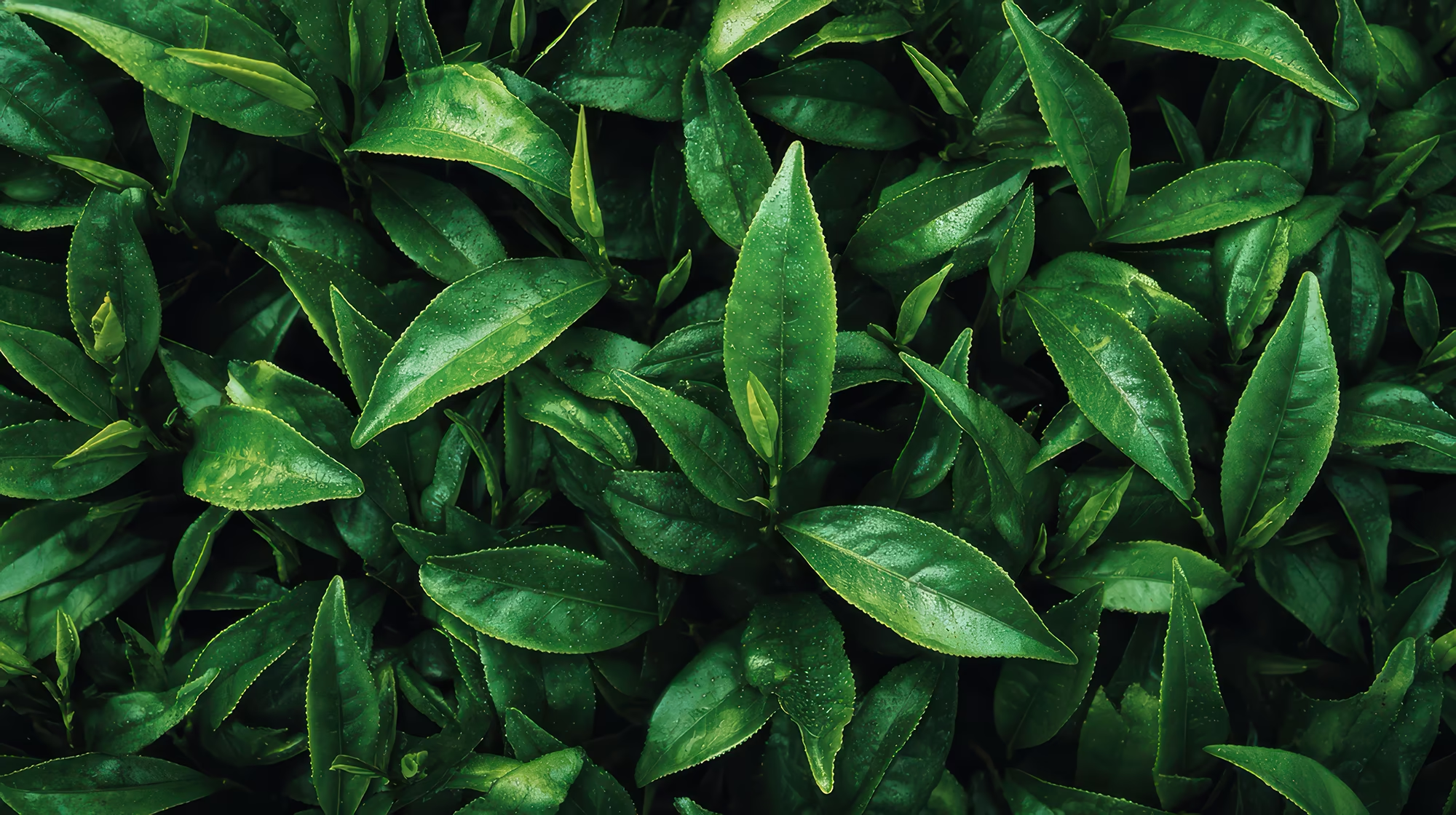
All tea — green, oolong, black, white, pu-erh, yellow — comes from the same plant. Camellia sinensis, a subtropical evergreen shrub native to southern China and the eastern Himalayas. What separates the categories is not the plant but what happens to the leaves after they are picked.
Green tea is what you get when those leaves are heated almost immediately, before oxidation has a chance to transform them. The result is a tea that stays close to the fresh leaf — its colour, its aroma, its slightly vegetal taste. Green tea is, in a sense, the most conservative of the tea categories. It tries to preserve.
What Makes Tea "Green"
The key step is called kill-green, or sha qing in Chinese. Soon after the leaves are picked, they are exposed to heat — typically within hours. The heat denatures the enzymes in the leaf that would otherwise start to oxidize it. Oxidation is what turns an apple brown when you cut it, and it is what turns tea leaves dark.
Stop oxidation and you keep the leaf green. The two most common ways to do this are pan-roasting, used almost everywhere in China, and steaming, used almost exclusively in Japan. After kill-green, the leaves are usually shaped, dried, and sorted. That is, in outline, all there is to it.
Most of the variation in green tea comes from what happens before kill-green (which leaves are picked, how they are plucked, how long they wither) and from exactly how the heating is done (temperature, duration, method). Small differences produce large ones in the finished tea.
Chinese Green Tea
China produces the widest variety of green teas in the world. Most of them are pan-fired. The canonical example is Longjing (Dragon Well) from Hangzhou, with its flat jade leaves and chestnut sweetness. Others include Bi Luo Chun from Jiangsu, twisted like snail shells and remarkably fragrant; Mao Feng from Anhui, with pointed hairy buds; and Taiping Houkui with its distinctive long flat leaves.
Chinese greens tend to taste toasty, sweet, and nutty, with a clear vegetal undertone. The pan-firing adds a layer of caramelization that you will not find in Japanese greens.
Japanese Green Tea
Japan almost exclusively steams its green tea. The result is a very different kind of drink: darker in colour when brewed, with a marine, umami quality that comes from the steaming process and often from shading the tea plants before harvest.
The main Japanese greens are Sencha (everyday steamed green), Gyokuro (shaded before harvest for extra richness), and Matcha (stone-ground shade-grown tea, whisked into water rather than infused). Japanese green tea is a system — each type exists in a specific relationship to the others.
How to Brew Green Tea
Green tea is the most temperature-sensitive category. Water that is too hot makes it bitter and dull. The rule of thumb: boil your water, then let it cool for a few minutes before pouring. Most greens want water between 70°C and 80°C — cooler for delicate Japanese teas, a little warmer for sturdier Chinese ones.
Use less leaf than you would for black tea. A rough starting point is 2 to 3 grams per 150 millilitres of water, with infusions of 60 to 90 seconds. Good green tea rewards multiple infusions — the first is light, the second fuller, the third often surprising.
For the specifics of each tea, see the individual guides. The basic principle, though, is the same across the category: cooler water, less leaf, shorter infusions than you are probably used to.
When to Drink It
Green tea is meant to be drunk fresh. A high-quality Chinese green from the spring harvest is at its best within six months and noticeably declining after a year. Japanese greens age even faster — sencha will lose its bright character within weeks of being opened.
This is worth knowing because most green tea sold in supermarkets is old, often very old. The difference between a fresh spring Longjing and a year-old supermarket green is the difference between two different drinks. If you have only ever had the second, the first will surprise you.
Store it cold and sealed. A fridge is fine if your packaging is airtight. Whatever you do, drink it within the year.