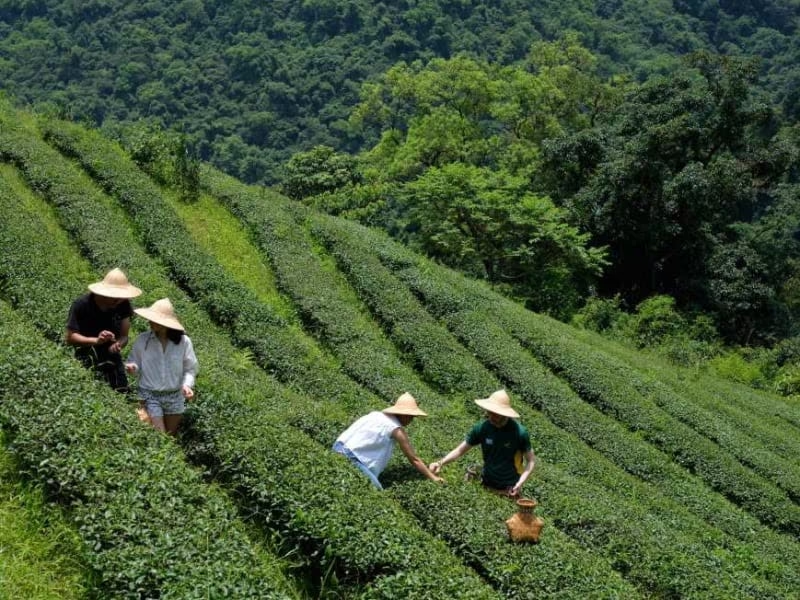
Taiwan produces the best high-altitude oolongs in the world. The country's central mountains rise above 3,000 metres, and tea is grown on terraced slopes at elevations from 800 to over 2,500 metres. The higher up you go, the more distinctive the tea gets.
"High-mountain" — gao shan in Mandarin — is a specific designation: tea grown above 1,000 metres. Above that line, the climate changes. Nights are colder, growing seasons are shorter, mist covers the plants for much of the day. All of this transforms how the tea plant produces its leaves. The result is a category of tea that is refined, bright, and quite unlike anything made elsewhere.
The Main Growing Areas
Alishan is probably the most famous high-mountain region — a mountain range in central Taiwan, with tea plantations between 1,000 and 1,700 metres. Alishan oolongs tend to be floral, creamy, and clean, often with a distinct note of fresh milk or butter that comes from the specific cultivar and processing.
Lishan sits higher, between 1,700 and 2,500 metres. The higher altitude produces an even more concentrated tea, with more floral complexity and a longer finish. Lishan is rare and expensive — genuine tea from the best Lishan plots is among the most sought-after in Taiwan.
Shan Lin Xi, Dayuling, Meishan, and others fill out the map. Each has its own character, but they share the high-mountain family resemblance: bright, floral, clean, with a quality that people sometimes describe as high frequency — as if the tea is operating in a higher register than lowland oolongs.
The Cultivar: Qing Xin
Most Taiwanese high-mountain oolong is made from a single cultivar, Qing Xin ("green heart"). It is a varietal introduced from Fujian in the 19th century, and Taiwan has spent over a century selecting and adapting it for high-altitude growing.
Qing Xin is a difficult cultivar — sensitive to disease, slow-growing, low-yielding. But it produces the most refined flavour of any cultivar grown in Taiwan. Almost every great Taiwanese oolong comes from Qing Xin bushes, and the high-mountain style is, in a sense, the highest expression of what this plant can do.
Processing and Style
High-mountain oolongs are typically lightly oxidized — around 15 to 25 percent. They are rolled into tight balls, the classic modern oolong shape. Most are only lightly roasted or not roasted at all, keeping the tea close to its original green character.
This is the modern style, and it is relatively recent. Traditionally Taiwanese oolongs were more heavily oxidized and roasted — closer to the Wuyi tradition they originally came from. The light green modern style developed in the late 20th century, driven partly by taste, partly by market demand for brighter, more photogenic teas.
Heavily roasted Taiwanese oolong still exists — dong ding is the classic example — and connoisseurs often prefer it. But when most people say "high-mountain oolong," they mean the light green style.
What It Tastes Like
A good high-mountain oolong opens with an aroma that is almost dominant — floral, creamy, sometimes with a note of fresh tropical fruit. The first sip is clean and sweet, with a delicate body and a finish that lingers. There is almost no astringency, almost no bitterness.
The quality that connoisseurs look for is clarity. A great high-mountain oolong is transparent in character — you can taste each element separately, and they are all bright. A mediocre one is muddled, flat, or too sweet.
The aftertaste is crucial. After swallowing, the tea should leave a clean, cooling sensation in the mouth — sometimes described as refreshing, though that word is underselling it. This cooling quality, shuang, is something that only the best high-altitude teas have, and once you've noticed it, you will recognize it in other teas too.