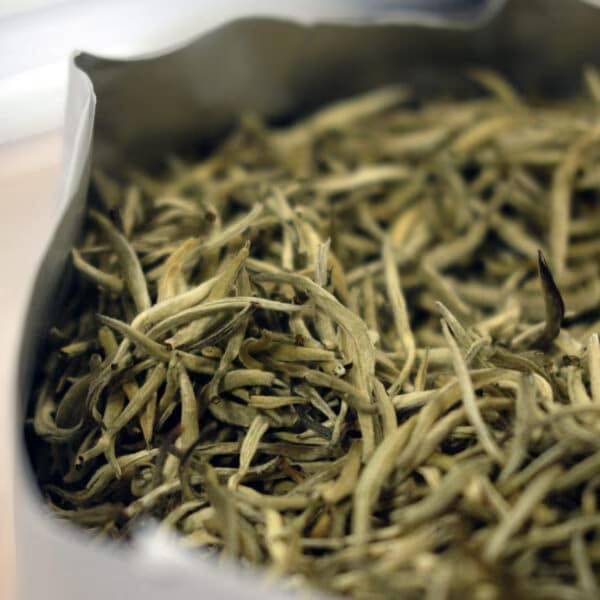
White tea is the simplest tea in the world to make. The leaves are picked, left to wither in open air for a day or two, and dried. That is the entire process. No pan-firing, no rolling, no shaping, no long oxidation.
That simplicity has consequences. White tea preserves the leaf almost exactly as it came off the plant — even its fine silver down, the fuzz that grows on young buds and gives the highest grades their name. But it is also one of the most delicate teas to drink, and one of the easiest to get wrong.
Where It Comes From
White tea originates in Fujian province, specifically in the counties of Fuding and Zhenghe in the north. These areas grow tea cultivars — Da Bai (Big White) and Da Hao (Big Hao) — that are specifically suited to white tea production, with larger buds and more silvery down than most tea cultivars.
In recent years, white tea has also been produced in Yunnan, Guangxi, and elsewhere, sometimes from cultivars originally intended for black or pu-erh tea. These non-Fujian white teas can be interesting, but they are different from the traditional style.
The Four Grades
White tea is graded by what part of the plant is used — just the bud, the bud with one or two leaves, or only the leaves.
Bai Hao Yin Zhen (Silver Needle) is the top grade. Made only from the unopened buds, it is covered in the famous silver down. The liquor is pale, straw-coloured, and the flavour is extraordinarily delicate — sweet, with a faint melon or fresh hay note.
Bai Mu Dan (White Peony) is the next grade — one bud and one or two young leaves. It has more body than Silver Needle and a fuller flavour, often with notes of apricot and honey.
Shou Mei uses mature leaves without the buds. It is stronger and earthier, with a honeyed character when aged.
Gong Mei is a slightly higher version of Shou Mei, still leaf-only but with more careful sorting.
The Case for Age
Most tea is best drunk fresh. White tea is the exception. While a fresh Silver Needle is a fine tea, aged white teas — kept properly for five, ten, twenty years — develop a deeper, honeyed, almost dried-fruit character that the fresh tea does not have.
Aged white teas are often pressed into cakes for storage, like pu-erh. They taste sweeter, warmer, and less delicate than fresh whites. Fuding has recently seen a boom in aged white tea production and trading, and it is now possible to find white teas dated 10 or 20 years old.
Whether you prefer fresh or aged is a matter of taste. Fresh white tea is bright, delicate, and light on the palate. Aged white tea is rich, honeyed, and warming. They are almost different drinks.
How to Brew White Tea
Fresh white teas want cooler water than most teas — around 80°C to 85°C. Use plenty of leaf (because the leaves are fluffy and take up volume), about 4 to 5 grams in a 150ml gaiwan. First infusion 30 to 60 seconds.
Aged white teas can take hotter water, 95°C to boiling. They also brew longer. An aged Shou Mei can be boiled gently for several minutes and come out sweet and full.
White tea is famously temperamental. Water too hot for fresh teas makes them bitter or papery. Water too cool leaves the flavour flat. The brewing is worth experimenting with — the difference between a well-brewed and poorly-brewed white tea is larger than in almost any other category.